

 Suche
Suche
 Mein Konto
Dr. Heike Muchar: New Primaria brings a breath of fresh air to the Spittal Hospital!
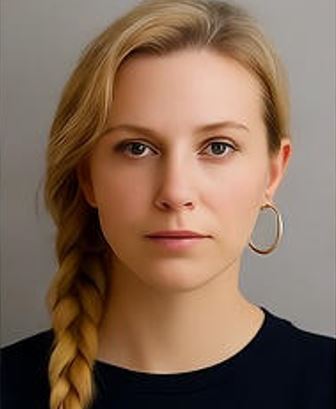
Dr. Heike Muchar is the new head of the department of internal medicine at the Spittal an der Drau hospital. She plans innovative changes.

Dr. Heike Muchar: New Primaria brings a breath of fresh air to the Spittal Hospital!
As part of a new appointment, Dr. Heike Muchar took over responsibility as the new Primaria of the Department of Internal Medicine at the Spittal an der Drau Hospital. She sees it as her heart's desire to work in her hometown and strives to further develop the department in the interests of her colleagues and patients. The hospital's collegial leadership particularly welcomes this new appointment, as it takes place in the hospital's anniversary year. Dr. Gerald Bruckmann, the medical director, expressed his pride in the selection of Dr. Muchar, a highly qualified in-house doctor who will bring a breath of fresh air to the department. This personnel decision is in line with an overarching trend that can be seen in many hospitals: the search for new leadership structures in medicine.
A significant challenge for many clinics is filling vacant chief physician positions. The traditional hierarchical structure is increasingly being questioned. In this context, team chief physician models and collegial leadership teams are becoming increasingly important. This development often occurs at the initiative of the doctors themselves, who want management tasks to be distributed equally and thereby achieve better decision-making quality. The motivation for the change to collegial structures is based on both medical strategy and economics, as they can enable a higher quality of patient care while at the same time better developing the doctors' potential.
Innovative leadership approaches in medicine
The difficulty of successfully filling vacant chief physician positions requires new approaches. Team chief physician models offer a promising alternative to the traditional leadership structure. These models are particularly attractive for physicians who want to have an influence but do not want to assume sole leadership responsibility. They also value the opportunity to work in a team and enjoy security structures that are anchored in collective agreements.
Collegial management teams are characterized by a modern employer image and promote quality in patient care that meets current and future requirements. These teams not only promote the professional development of doctors, but also provide a platform for shared responsibility and liability, which leads to better identification with the clinic. However, the introduction of such teams requires a convincing concept and a legitimate spokesman in order to clearly regulate the distribution of roles and decision-making processes.
Requirements and challenges
In order for a collegial leadership team to be successfully implemented, binding regulations are necessary. A team statute must be crucial in order to determine tasks, representation regulations and communication structures. In the first 100 days of cooperation, the service contract and cooperation law aspects should also be clarified. It is recommended that you seek legal advice in order to optimally design the framework conditions and to adequately master the challenges associated with the transition to collegial management structures.
In view of these developments, it is clear that intensive public relations work is necessary to ensure the social prestige of chief physician positions and to clearly communicate the professional competence and the quality of treatment. This ensures that innovative approaches to hospital management can be successfully implemented not only in theory but also in practice.
Further information on the challenges and strategies in hospital management can be found at Gailtal Journal, Medical Journal and Medical positions.