

 Suche
Suche
 Mein Konto
International Day Against Disinformation: Democracy in Danger!
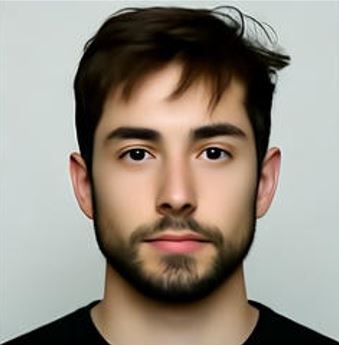
November 27th is the international day against disinformation, initiated by Dietmar Pichler to strengthen democracy.

International Day Against Disinformation: Democracy in Danger!
November 27th marks International Disinformation Awareness Day worldwide, an event launched in 2021 by Dietmar Pichler, now Head Analyst at the Institute for the Defense of European Democracies (INVED.eu). He received support from Anna Pattermann, chairwoman of the Unlimited Democracy association. The day aims to highlight the dangers of disinformation, which poses a significant threat to democracy, the environment and health at both international and national levels. Autocratic states such as Russia and China as well as local populists specifically use disinformation to weaken democratic structures. On this day we also thank those who actively work against fakes, manipulation and propaganda and INVED would like to contribute to the defense of democracy against international attacks on the information space.
In the context of disinformation, interdisciplinary approaches are becoming increasingly important. The first annual Disinformation Day took place on October 26, 2022, organized by Good Systems' research team with the participation of around 150 participants from all over the world. The aim of this event was to discuss the challenges and opportunities in the fight against digital disinformation. Dr. Dhiraj Murthy and Dr. Matthew Lease opened the discussion, which covered, among other things, the topics of fact checking and bias in data annotation. An important point of the keynote speech by Dr. FullFact's David Corney said it is essential to review the most relevant claims daily and involve users in all phases of tool development.
The challenges in fact checking
As progress has been made in combating disinformation, the weaknesses of fact-checking have also been highlighted. Meta and Google have announced that they will stop using fact checks on social networks and search results from 2025, which, according to Google, is due to low usage and a lack of significant added value. Mark Zuckerberg noted that the fact-checking program is often perceived as a censorship tool, even though it is not intended to censor content. In fact, fact checks often reach fewer people than the original information, and there is more disinformation than fact checks.
Fact-checking claims can be time-consuming, limiting the effectiveness of the efforts. Users may incorrectly assume that unverified posts are accurate, which further promotes the spread of false information. The algorithms of social networks also promote emotionally formulated disinformation over factual content. Contextualizing these challenges and developing new technologies to support fact-checkers are therefore necessary. There should be a call for increased collaboration between researchers, fact-checkers, professionals and organizations to develop effective, fair and diverse tools to combat disinformation.
In schools, fact checks should also be used as an opportunity for discussions about media mechanisms and their relevance today. Approaches could be developed for teachers to adapt fact checks to the consumable format of young users, for example by converting them into videos. Despite the challenges and criticism, fact-checking remains an important method for debunking disinformation and helping to educate an informed public.
Overall, it is up to society to take active action against the increase in disinformation and, in particular, to promote media literacy in order to meet the challenges of the digital age.