

 Suche
Suche
 Mein Konto
Ex-scammer helps victims get their money back
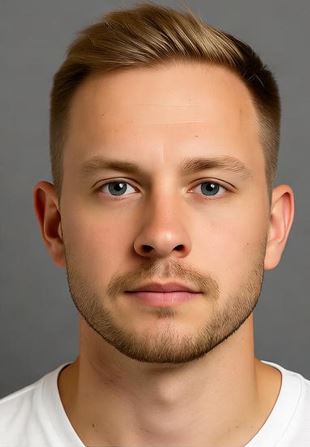
Former fraudster Marwan Ouarab helps victims of online scams get their money back. Learn how he turned his dark past into a mission to save others.
Ex-scammer helps victims get their money back
Marwan Ouarab is an unusual hero.
The convicted fraudster who once nearly went to prison for selling counterfeit concert tickets has found a new calling: saving fraud victims from their online scammers. For many, it is their last hope of getting their stolen savings or valuable possessions back.
A path to salvation
“It is the path to salvation that I have chosen,” Ouarab said with a smile. The 29-year-old founder of FindMyScammer.com - a company founded in 2023 that investigates online scammers - has been thrust into the international spotlight in recent weeks after the story of one of his victims went viral.
The story of Anne
Anne - who asked to be identified only by her first name to protect her privacy - is a 53-year-old French woman who was scammed out of 830,000 euros ($860,000) by fraudsters. She was convinced by alleged scammers for over a year that she was dating Hollywood actor Brad Pitt. The perpetrators bombarded her with fake photos and deepfake videos in which the supposed actor spoke to Anne and asked her for money.
The videos sent to Anne were professionally made and seemed convincing at first glance, but were revealed by sometimes bizarre audio transmissions and unnatural eye movements of the AI-generated fakes.
The hunt for the fraudsters
In an interview with French broadcaster TF1, which covered Anne's story, Ouarab used open source intelligence techniques (OSINT) to track down the fraudsters in Nigeria. To find the accused, Ouarab used a tried and tested tactic: he exploited the fraudsters' alleged greed by sending them a prepared link under the pretext of a legitimate banking platform.
The art of hunting down scammers
“Basically, OSINT is the art of finding a person with very little information,” Ouarab explained. With just a phone number or email address, the 29-year-old can expose online fraudsters and find out their real name, age and place of residence. “I just had to wait for them to click on the link and give me their consent,” he continued. This method ensures that the data collected can legally be passed on to the police. "It's not just reformed fraudsters who can master these tricks. Anyone can use these tools," he emphasized. “This is really basic OSINT that I used for this case.”
Legal action and investigations
Ouarab was eventually able to obtain the alleged fraudsters' IP address, geolocate them and identify three young men living in a house in Nigeria. He compiled all of these details into a report that Anne submitted to police when she filed a complaint, her former lawyer Laurène Hanna told CNN.
French authorities have now opened an investigation and Ouarab's report will be used as evidence, the Réunion prosecutor's office told CNN. However, no one has been charged in this case so far.
A worldwide problem
While Anne's story seems extraordinary, for Ouarab and the FindMyScammer team it is unfortunately all too common. In 2024 alone, consumers worldwide lost more than $1 trillion to scams, an international survey by the Global Anti-Scam Alliance found.
The rise of complex deepfakes and the urgent need for better detection methods will also be on the agenda at the international AI Action Summit in Paris this week.
Awareness for fraud victims
“Anyone can become a victim of these scams,” Ouarab warned. He speaks from personal experience: A few years ago, his aunt lost jewelry worth 80,000 euros ($82,880) while trying to sell it on Leboncoin.fr, a French online marketplace. In desperation, she asked Ouarab for help to track down the fraudsters.
"I learned all my skills from the dark side. I realized that they could also be used for good purposes," Ouarab recalled. He was able to track down the fraudster and get him to return the stolen jewelry.
The turning point in Ouarab's life
Just six years ago, Ouarab himself was the impostor. He sold fake concert tickets by printing working barcodes on blank tickets that he stole from his local store. The scam worked for a while, but police eventually figured out what he was doing. At the age of 25, he was convicted of fraud and received a 10-month suspended sentence and an order to pay 11,000 euros in compensation to the victims.
He decided to change his life and officially founded FindMyScammer.com in 2023, which he describes as the first company dedicated to tracking online scammers, although other companies such as Forward Global in the US offer similar services. What started as a one-man operation has developed into a thriving company with 14 employees. A success that is set to continue to grow as the number of online scams explodes.
Recovering losses
In the U.S. alone, reported losses from so-called “pig butchering” scams — a mix of “romance” and financial scams — rose from $907 million in 2020 to a staggering $2.9 billion by November 2023, the FBI reported. “As time goes on, the number of victims will only continue to increase,” explained Ouarab, whose company receives between 100 and 150 new fraud requests every day.
The consequences of online scams can be devastating, leaving some victims with depleted life savings, broken families or even driving them to suicide. The situation is often made worse when authorities refuse to investigate. "In many cases, the police have rejected my clients' complaints because there was not enough evidence," lawyer Hanna told CNN.
A concrete example of fraud
Luca, who does not want to use his real name for security reasons, is a former customer of Ouarab and shared a similar story. He lost 67,000 euros ($69,500) in a "pig butchering" scam and felt powerless when French law enforcement refused to investigate.
"I was completely helpless. When I went to the police to file a complaint, they made me understand that they couldn't help me," Luca said.
In 2022, Luca met "Zara" on Tinder, and the two quickly began an online relationship, exchanging messages and making video calls. They never met in person as “Zara” claimed to be working in finance in London while Luca was in Paris.
Four months into the relationship, she told him that she was making money investing on a crypto platform and suggested he try it too. Luca initially invested 10,000 euros ($10,400) and seemed to double his returns. He then invested 40,000 euros, and after two months his virtual wallet was worth 100,000 euros. However, when he wanted to withdraw money, he was asked to pay 17,000 euros ($17,700). “Zara” assured him that this was a normal process for paying taxes on profits. Luca paid; He never saw the money or “Zara” again.
Support with tracing
For a fee of 2,500 euros ($2,600), Ouarab identified "Zara," Luca's accused fraudster, and tracked her to Dubai, where she is allegedly part of a larger fraud scheme. With this information, Luca was able to ask his bank to reimburse almost half of his losses and launch an official investigation into his case.
Banks have certain obligations towards their customers. According to Louis Audibert, Head of Investigations and Recruitment at Forward Global, “When you transfer money to someone, the bank must ensure that the name of the account holder matches the account number.” In Anne's case, this means the bank had an obligation "to verify that the bank account was actually in the name of Brad Pitt."
You also have a duty of prevention. “If I, as someone earning a salary in France, start transferring large amounts of money abroad, the bank should flag these transactions because they are irregular,” Audibert said.
The challenge of fraud detection
Although not every case results in a success story, FindMyScammer.com investigates a variety of scams. From “romance” scams and “pig butchering” to intimate photo blackmail and financial fraud, the company’s work now extends beyond individual clients.
Companies hire Ouarab and his team to test their security measures by attempting to defraud them. Even governments and public institutions, such as the French National Center for Child Protection, are working with FindMyScammer.com to crack down on underage prostitution networks, he explained.
Risks and responsibility
"We are working to identify the leaders of these prostitution networks. This has been very effective," said Ouarab, visibly proud of his company's broader impact.
However, pursuing crooks comes with its own risks. Ouarab and his team have received numerous threats, which is why the identities of all employees except Ouarab are being kept secret. He himself makes sure to keep his place of residence secret as he has had to move several times for security reasons.
“I have to be very careful, but I know it’s for a good cause,” he said. "I used to be a fraud, and I deeply regret it. If this is the price I have to pay to redeem myself, then so be it."